March 2026
The Month We've Been Waiting For

A Flood of Good Books: March at Port Book and News

Usually, great nature writing trickles in over a season. This March, it arrived in a flood.

Publishing schedules have aligned to give us a whole new shelf for the naturalist's library, all at once. The lineup is breathtaking: deep dives into the Cascade wilderness, the secret lives of salmon, and the centrality of flowers, alongside new work from two writers who've changed how we think about hope in the natural world. If you've been looking for a way to root yourself in the Pacific Northwest this spring, this is the month.

Even better: one of these voices is coming to us in person. On April 11, Eric Wagner brings Seabirds as Sentinels to the Dungeness River Nature Center — a perfect bridge from page to place.

Details below and on the back.

Our Next Author Event

April 11: Eric Wagner

Three miles off the Hoh River mouth, Destruction Island sits just close enough to see and just far enough to remain a mystery. The lighthouse went dark after 117 years. Nobody goes there now — except scientists. Eric Wagner went, and came back with a remarkable book.

Seabirds as Sentinels moves between the vast and the intimate — ocean currents and marine heatwaves, then down into a dark burrow to watch a rhinoceros auklet feed its chick. Wagner weaves together marine science, lighthouse history, and the deep story of the Olympic Coast — from Destruction Island to Taholah, where the Quinault are relocating their village to higher ground. What the fates of these birds tell us about the future of our waters, and the communities already being reshaped by it. A book about this place, written for people who care about it.

We are honored to host Professor Wagner and partner with the Dungeness River Nature Center to present this event.

Staff Picks

The Lies that Summon the Night
by Tessonja Odette

From the setting of the Holy Continent to the witty characters on it, Tessonja Odette does a wonderful job of weaving a beautifully dark and twisty world into this amazingly fun romantasy. She tells the story of Inana Westwood, a runaway performer in a world where all forms of art are banned, and a Shadow Hunter named Dominic who has a need for people like Inana. Make sure to pick up a copy of this first in a series now so you can say you've been a fan since the beginning! P.S You really don't want to miss the BEAUTIFUL map.

-Belle

This Kingdom Will Not Kill Me
by Ilona Andrews

Say you are a fan of a book series, perhaps 'Game of Thrones', and you have read all the books multiple times. You know the world, you know the characters. This is what you come back to read once every year or two. One day you wake up and find yourself in the world of this book series. You are naked and you have no special isekai powers, only your knowledge of the characters and the plot. How long do you think you would survive? If you do survive more than a day, how would your choices change the world you loved to read? This is what happens to Maggie in "This Kingdom Will Not Kill Me". I LOVED this book (the audio book too!) and I hope you will too.

-Helena

Nature Books for March

The Glorians
by Terry Tempest Williams

A coyote willow blossom carried by an ant. The night sky. A cup of tea. In her first book since "Erosion", Williams introduces us to the "Glorians"—not distant deities, but the overlooked presences of the natural world that demand our attention. Moving from the red rock deserts of Utah to the halls of Cambridge, these essays balance grief for the Great Salt Lake and the loss of her friend Barry Lopez with a stubborn insistence that beauty is still unfolding. As Richard Powers notes, reading Williams is akin to reading Whitman or Thoreau: an act of recovering a "capacious spirit" and rejoining the urgent, living world.

Seattle's Locks and Ship Canal
by David B. Williams

If you’ve ever watched a fishing boat rise from salt water to fresh at the Ballard Locks, you’ve stood at one of the most consequential engineered intersections in the Northwest. This portable, accessible guide—adapted from the authors' acclaimed 'Waterway'—unpacks the sixty-plus years of civic ambition and ecological transformation behind the canal. David B. Williams ('Homewaters') and Jennifer Ott (HistoryLink) are the perfect guides to this history. For those of us on the Olympic Peninsula, this is our "upstream" story—a direct line from the Ballard Locks to the Strait and the salmon that thread our watersheds. At $24.95, it’s a perfectly priced gift for any local history buff.

To Catch a Fish
by Mark Kurlansky

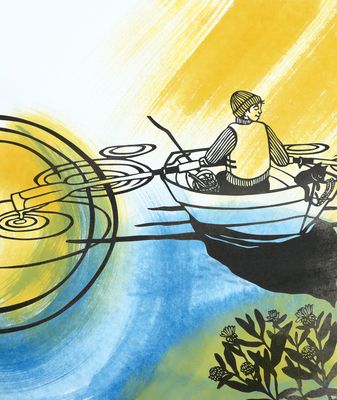
Kurlansky was a commercial fisherman before he wrote Cod and Salt. Forty short essays on fish and the compulsion to pursue them, paired with Bri Dostie's illustrations. For anglers, certainly — but also for anyone who's stood at the edge of the Elwha and felt the pull. A handsome small-format hardcover.

How Flowers Made Our World
by David George Haskell

Haskell is, by any measure, one of the most celebrated science writers working in the naturalist tradition today — the kind of writer E.O. Wilson called "a new genre of nature writing, located between science and poetry." His new book insists we understand that flowering plants are not decoration but revolution. When angiosperms evolved, they remade the living world — reinventing plant reproduction, feeding the legions of animals (including us), building cooperation out of what had been competition, wielding beauty as a force of ecological transformation. Haskell profiles eight plants in depth — magnolias, orchids, roses, seagrasses, grasses, tea, pansies — and asks what they teach us about how thriving worlds are actually built. Elizabeth Kolbert calls it "mind-blowing."

John McPhee: Encounters in Wild America
by John McPhee

It’s finally here: the definitive John McPhee collection. This Library of America edition brings together four complete books, including two PNW essentials: the "magisterial" Alaska portrait 'Coming into the Country' and the North Cascades-based 'Encounters with the Archdruid'. McPhee is the writer who proved that journalism and ecology are the same art, and seeing these works together makes the case for him as the 20th century's most vital voice. While $45 might seem like an investment, for 900 pages of the best nonfiction ever written, it’s a bargain. If you know someone who loves the wilderness, this completes their library.

New Books this month

The Beginning Comes After the End by Rebecca Solnit · Mar 3 — The essential sequel to 'Hope in the Dark', twenty years later. A sweeping survey of sixty-five years of social and environmental transformation — from an energy revolution to salmon returning to restored streams. Instead of consolation, hard evidence of what is possible.

A Far-flung Life by M.L. Stedman · Mar 3 — Stedman's first novel since The Light Between Oceans. Enormous sheep station in Western Australia, vast and sweeping.

Lady Tremaine by Rachel Hochhauser · Mar 3 — Cinderella retold from the stepmother's POV, shattered and rebuilt. Historical, feminist, twist-heavy.

Whidbey by T. Kira Madden · Mar 10 — Debut novel from the author of Long Live the Tribe of Fatherless Girls. Literary thriller set on Whidbey Island. Three women connected through an abuser's murder. This is a major Pacific Northwest debut.

Chain of Ideas by Ibram X. Kendi · Mar 17 — The 'Stamped from the Beginning' author traces how "great replacement theory" moved from fringe conspiracy to global political force.

Life: A Love Story by Elizabeth Berg · Mar 17 — Classic Elizabeth Berg—warm, wise, and life-affirming, focusing on friendship, reconciliation, and the beauty of small moments.

Western Star by David Streitfeld · Mar 24 — The definitive McMurtry biography, by the NYT journalist. For anyone who's read 'Lonesome Dove' or appreciates a good bookstore. [pauses for effect] A life in books and landscape.

Famous Last Words

The creatures outside looked from pig to man, and from man to pig, and from pig to man again; but already it was impossible to say which was which. — George Orwell, Animal Farm

Old Eric Blair new how to end a book. And begin them. And write all those words in between. Animal Farm remains a bestseller after 80 years. Thank goodness for Secker & Warburg, the fiercely independent British house that championed Orwell (the pen name of Eric Blair) when he was an outlier, with editors who said "yes" to politically dangerous work simply because they believed in it.

March is Small Press Month, and we are celebrating that spirit in our window display. Every title featured comes from a publisher independent of the five corporations that dominate the industry. Small presses are where the risks are still taken—on debut voices, translated literature, and the niche subjects that matter most. Stop by and see the display; come take a chance on a press that takes chances.